

CICR – Health Safety Learning Program
Strengthening Awareness of Healthcare Safety through an Interactive Web Documentary
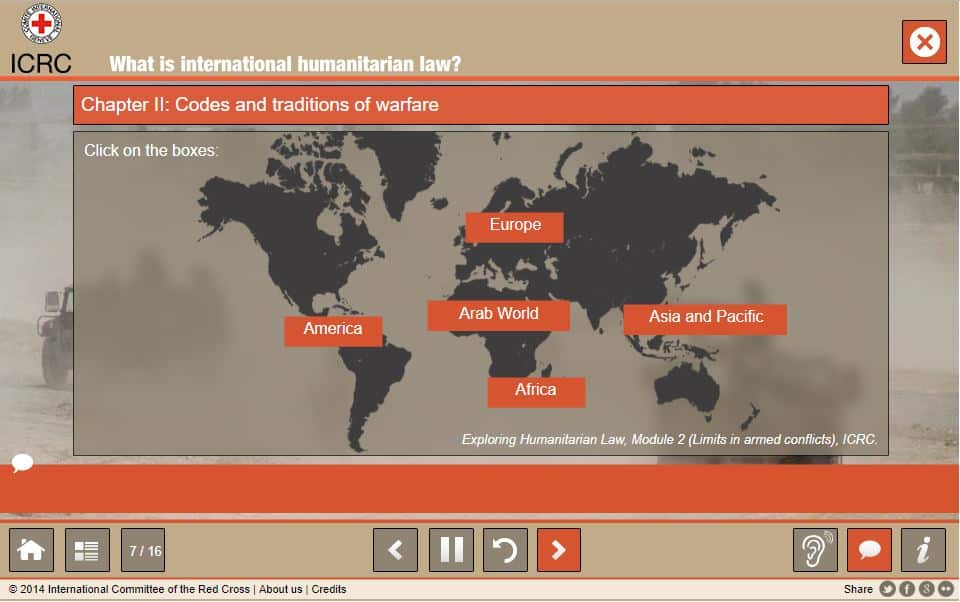
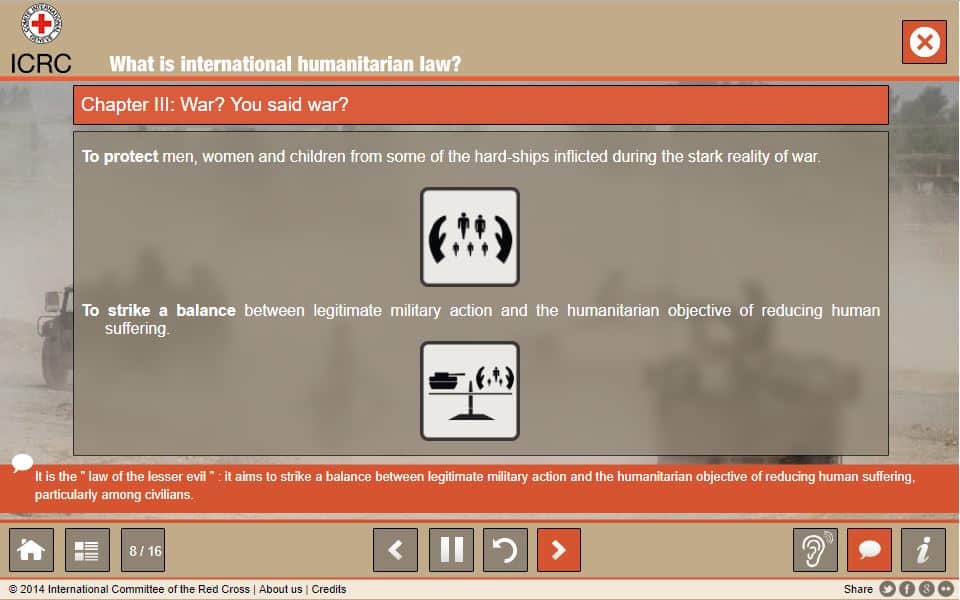
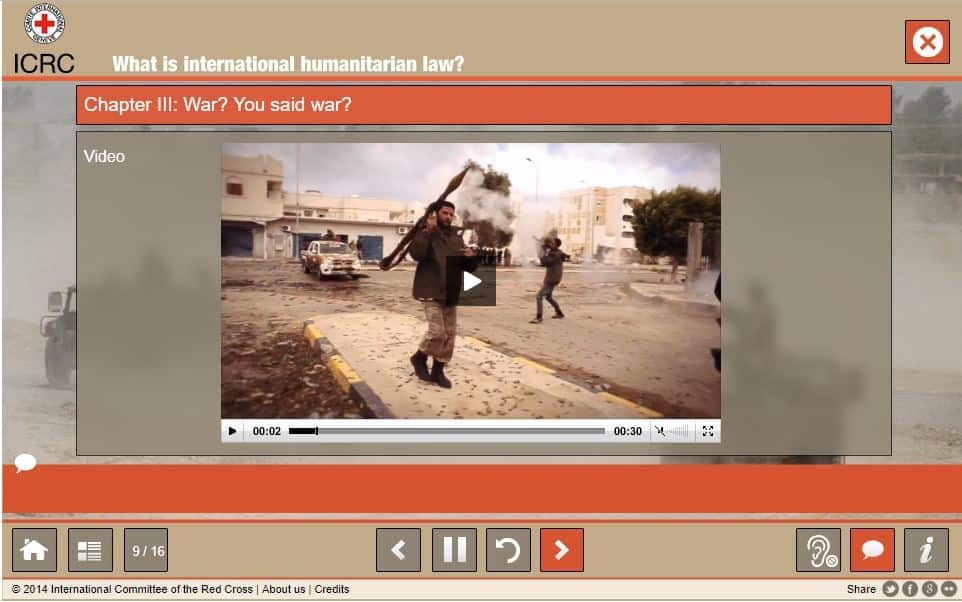
Identified Needs :
Awareness of Safety : Inform civilian and military healthcare personnel about the dangers associated with providing care in conflict zones.
Education on Rights and Responsibilities : Teach the rights and responsibilities of healthcare professionals in conflict situations and other emergencies.
Solutions Provided :
Interactive e-Learning Module : Based on the project "Health Care in Danger: The Rights and Responsibilities of Health-care Personnel Working in Armed Conflicts and Other Emergencies."
Multi-Platform Accessibility : Available on computers and tablets via the ICRC website.
Web Documentary : Comprises 10 chapters, each 5 to 10 minutes long, covering key themes of emergency situations in conflict settings.
Benefits and Expected Outcomes :
Risk Awareness : Enhanced awareness of risks through impactful visuals.
Emergency Response Reflexes : Improved reactions and practices in emergency situations.
Dynamic and Comprehensive Training : A fast, complete, and interactive module covering a wide range of essential topics.
Realistic Immersion : Use of striking images and videos to immerse learners in a conflict environment.
Practice Safety : Practical advice on securing methods to adopt in conflict zones.
The learning programme has been developed to prepare healthcare professionals for the unique challenges they may face while delivering medical assistance in armed conflicts and humanitarian emergencies. By combining legal principles with realistic operational situations, the course enables learners to better understand how international humanitarian law applies in complex environments where access to healthcare is often compromised.
The web documentary format offers a highly immersive learning experience by combining expert testimonies, documentary footage, interactive content and educational resources. This narrative approach helps learners connect theoretical concepts with real-life situations, making the training more engaging while encouraging deeper reflection on the ethical and professional challenges encountered in conflict zones.
Each chapter focuses on a specific aspect of healthcare delivery during emergencies, allowing participants to progressively build their knowledge of essential topics such as the protection of medical personnel, the rights of patients, humanitarian principles and the practical measures required to ensure personal safety. This structured learning journey enables learners to consolidate their understanding while maintaining a high level of engagement throughout the programme.
Interactive activities encourage participants to analyse situations, evaluate potential risks and make informed decisions based on the principles presented during the course. By practising in a safe digital environment, healthcare professionals develop the critical thinking and decision-making skills required to respond appropriately in highly sensitive and rapidly evolving contexts.
The online delivery of the programme ensures broad accessibility for healthcare workers, humanitarian organisations and educational institutions around the world. Available across multiple devices, the training can be completed at the learner's own pace, making it particularly suitable for international audiences operating in diverse geographical and operational contexts.
By combining immersive storytelling, interactive learning and practical guidance, the programme helps strengthen awareness of humanitarian principles while preparing healthcare professionals to act responsibly and safely during armed conflicts and other emergencies. It contributes to improving both individual preparedness and the overall protection of healthcare services in crisis situations.
Explore our other diversity and inclusion projects: concrete initiatives designed to raise awareness, foster inclusion, and support more equitable workplaces.